
Capabilities / 05 · SCREENING
Persons, Property, and Cargo Screening
Nonintrusive screening at intake, entrances, property rooms, mailrooms, loading docks, and vehicle gates.
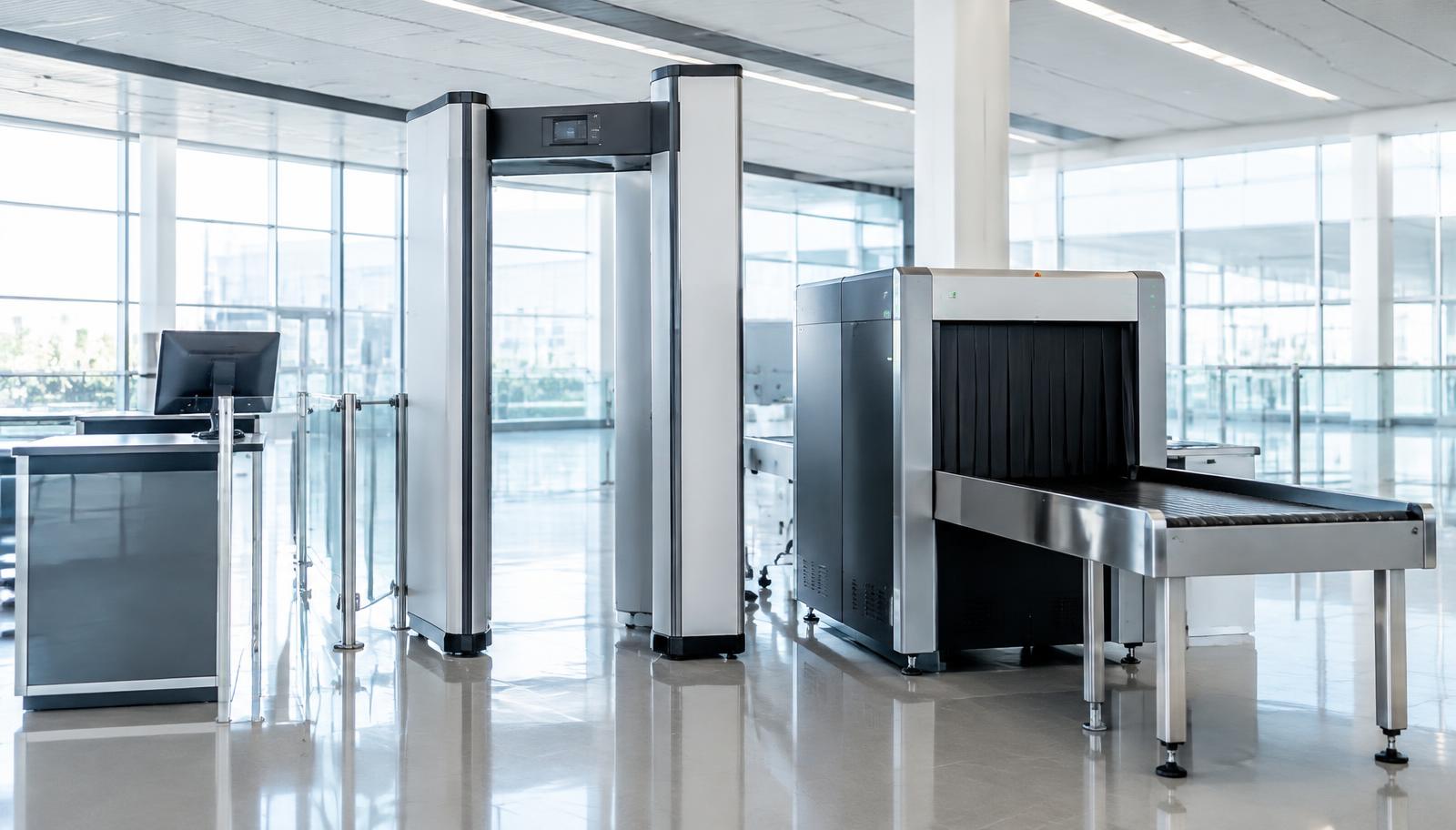
The operational problem
Manual searches are slow, staff-intensive, inconsistent between officers, and limited in what they can find. Nonintrusive screening — transmission body scanners, X-ray for property and mail, package and cargo inspection — can improve both detection and throughput while reducing the number of invasive searches performed.
These systems carry obligations that purchasing agents often discover late: radiation safety programs, state registration of X-ray sources, operator certification, dose recordkeeping for scanned individuals, image review standards, and privacy controls on stored images.
Placement matters as much as capability. A scanner at intake with no coverage of the staff entrance shifts the pathway rather than closing it.
- INTAKE
- SCREEN
- REVIEW
- RESOLVE
- CLEAR
What has to be decided before equipment
Radiation safety and registration
Transmission imaging systems require state registration, a radiation safety officer, dose tracking, and defined per-person limits.
Image review competence
Detection performance depends heavily on operator training, rotation, image-review workload, and periodic proficiency testing.
Site and power
Floor loading, room dimensions, shielding, power quality, and network connections frequently drive cost more than the equipment itself.
Throughput modeling
Shift change and visitation peaks must be modeled against scan and review time before a checkpoint design is fixed.
Policy and privacy
Image retention, viewing authority, opt-out handling, and documentation of findings need to be settled in policy before deployment.
Other capability areas