
Capabilities / 10 · RESPIRATORY
Respiratory Protection for Staff and Occupants
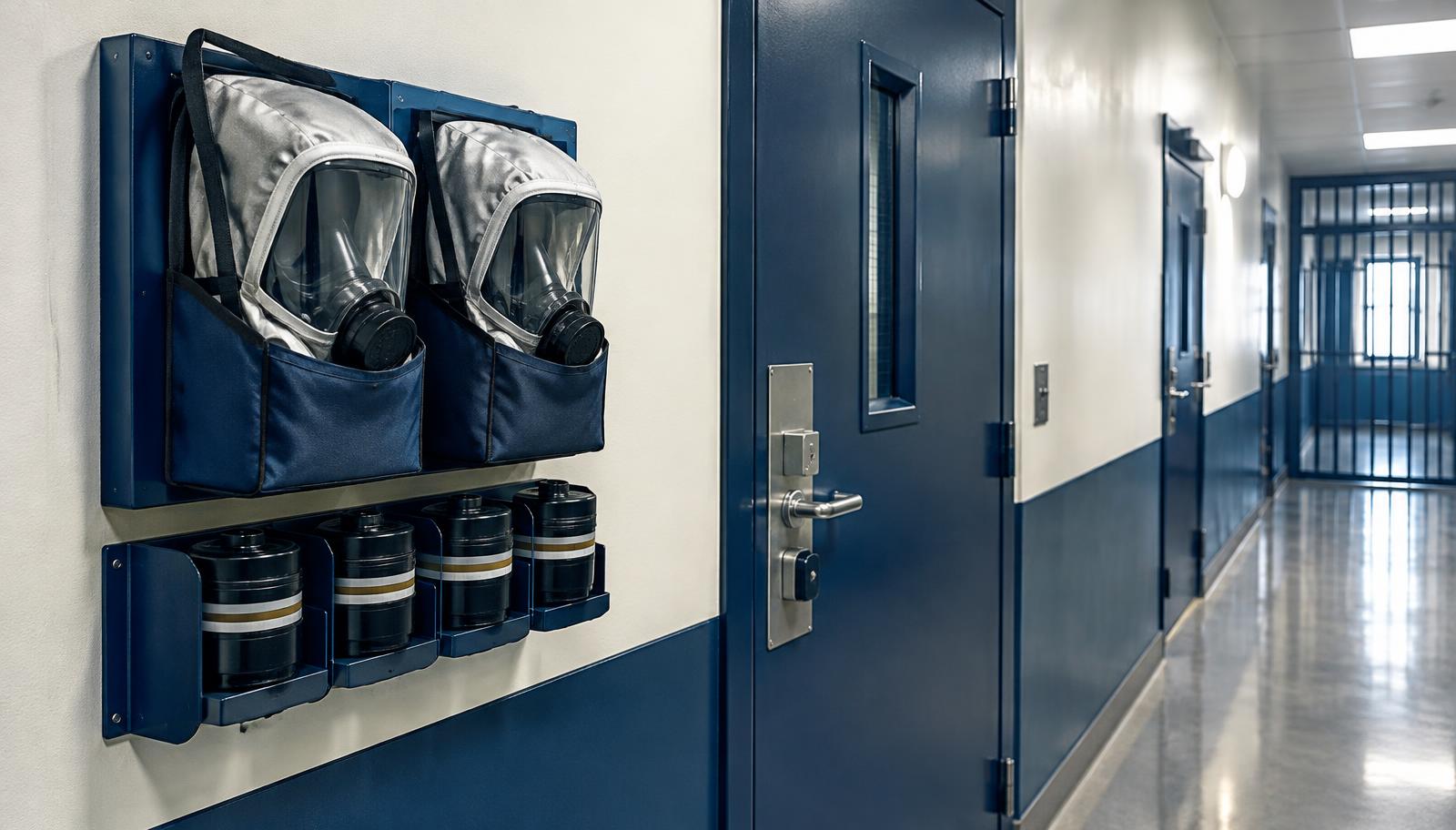
Escape hoods, industrial escape protection, and gas masks matched to the hazard and the task, so staff can manage locked areas and move people during smoke and hazardous-air events.
The operational problem
Smoke or hazardous fumes can impair evacuation while correctional staff manage locked areas and the movement of people who cannot leave on their own.
Fire safety and response plans address evacuation and coordination with fire services, but respiratory equipment must match the hazard and the task. Escape protection is different from rescue or firefighting protection.
Air-purifying equipment depends on adequate oxygen and correct filter selection. It does not replace SCBA for oxygen-deficient or immediately dangerous atmospheres.
- HAZARD
- SELECT
- PLACE
- TRAIN
- SUSTAIN
What has to be decided before equipment
Hazard matching
Smoke, riot-control agents, chemical exposure and fentanyl each need different protection and cartridge choices.
Escape versus rescue
Escape hoods support getting out; rescue and firefighting in oxygen-deficient air still require SCBA.
Placement and donning
Equipment must be where staff are, and staff must be able to put it on quickly under stress.
Shelf life and inspection
Sealed units and cartridges expire and need an inspection and replacement schedule.
Air-purifying respirators and escape hoods do not replace self-contained breathing apparatus in oxygen-deficient or immediately dangerous atmospheres.
Technology options Intercept evaluates
Elmridge Protection
iEvac smoke/fire escape hood, E500 industrial escape hood, and E600 gas mask, giving different protection options by hazard and task.
What to verify: Evaluate placement, donning, and cartridge selection against emergency plans. Air-purifying equipment depends on adequate oxygen and correct filter selection.
Other capability areas